
From Chaos to Clarity: A strategic approach to PPM tool selection
From Chaos to Clarity: A strategic approach to PPM tool selection

This whitepaper explores the evolving landscape of Project Portfolio Management (PPM) in life sciences, emphasizing the importance of selecting the right toolset to support organizational strategy, resource optimization, and cross-functional transparency.
It outlines:
PPM leaders and decision-makers in life sciences seeking clarity on tool selection.
Organizations aiming to align their portfolio strategy with execution.
Teams looking to optimize resources, improve collaboration, and increase decision confidence.
Anyone interested in understanding how AI and digital transformation are reshaping PPM practices.
Companies evaluating whether to choose ready-made vs. custom-built solutions.
It provides actionable insights, expert guidance, and a structured approach to help organizations make informed, confident decisions in their PPM journey.
Unlock your free copy
5 Best Project Portfolio Management (PPM) tools to look out for in 2026
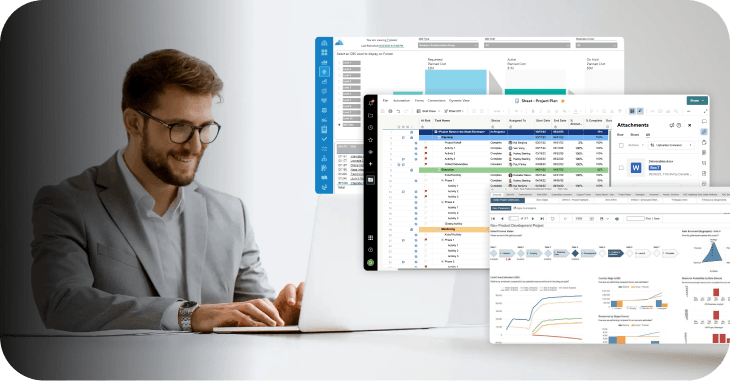
Project Portfolio Management (PPM) software use cases have evolved in 2026, from a reporting layer to an operating engine that aligns strategy, investments, capacity and operations. Nowadays, teams need advanced PPM tools that automate manual tasks, help make confident go/no-go decisions – and much more. In this blog, we’ll break down five PPM tools to watch in 2026 and describe what makes each one a strong fit for modern-day life sciences portfolios.What is Project Portfolio Management?Project Portfolio Management (PPM) is a structured roadmap for organizations to select, invest on and steer forward a strategic mix of projects to achieve their core business goals.Unlike project management (which focuses on one project), PPM takes all initiatives into consideration to answer big-picture questions, such as: Which projects should we start, pause, or stop for utmost value realization? Do we have the resource capacity to deliver without fail? What are our precautionary measures if priorities shift or timelines are missed?Learn more about how PPM tools promote better collaboration: click here What are the key PPM goals to look forward in 2026?SPM/PPM synchronizationThe priority is shifting towards connecting strategy to delivery in one decision loop. That means aligning Strategic Portfolio Management with PPM. The goal: stronger strategic alignment, accelerated trade-offs and higher visibility from strategic themes down to milestones and outcomes.AI enablement approachAdoption of AI is growing to reduce manual work and accelerate portfolio decision-making. The most valuable use cases are auto-classifying work, flagging risk early, predicting resource overload etc.The goal: adopting an AI-enabled ecosystem that improves planning, prioritization and portfolio performance.Growing need for defined processes Lastly, strong PPM outcomes will depend on clearly defined ways of working. This includes standardizing how demand is captured, priorities are set, resources are assigned and changes are approved. Alongside, data governance becomes non-negotiable with clear ownership, audit trails, and quality checks. The goal: converting the PPM tools ecosystem into a trusted source of truth for ultimate value realization.5 best Project Portfolio Management tools to achieve your goalsIn 2026, the “best” tool is the one that fits your portfolio maturity, governance and operations model. Here’s a breakdown of the five best options recommended by our PPM experts:1. SmartsheetTo start our list of project portfolio management tools, we take Smartsheet, a flexible work management platform that many PMOs configure for PPM. It’s best known for its spreadsheet-style interface, real-time dashboards, and workflow automation. It also scales portfolio execution using add-ons like Control Centre for standardization and roll-up reporting.Why choose Smartsheet – in a nutshellEasy adoption for new users due to the familiar grid viewStrong dashboards with automation feature for status reportingGood standardization at scale with templates/control featuresDisadvantages of the platform: Not ideal for high-complexity PPM use cases, compared to othersCan become complex to govern at enterprise scale2. PlanviewPlanview is an advanced PPM solution built for connecting portfolios, programs, resources, and financials to business outcomes, built for PMOs managing large portfolios. We recommend Planview due to its strong emphasis on balancing capacity with demand, portfolio visibility, and real-time tracking. Why choose Planview – in a nutshellPortfolio visualization and resource allocation for cross-team delivery planningAI-enabled capabilities to support portfolio strategy and executionSupports forecasting and what-if scenarios to guide resourcing decisionsDisadvantages of the platform: Budget/cost management can feel limited, compared to some alternativesCapacity planning can be hard to master; UI usability can be improved3. OnePlanOnePlan is a Project Portfolio Management (PPM) software designed to connect strategy to execution, with built-in focus on portfolio planning, resource capacity, and financial visibility. It’s a strong fit for organizations standardizing on the Microsoft ecosystem (Project, Teams, Power BI, Azure DevOps), and it’s often evaluated as a path forward as Project Online retires on September 30, 2026.Why choose OnePlan – in a nutshellStrong Microsoft alignment and integrations (good for Project Online migrations) Clear portfolio, resource and financial planning in one platform Pre-built Power BI reporting helps teams attain higher value realizationDisadvantages of the platform: Pricing is not fully transparent; typically, volume-based and sales-led Licensing/permissions can be complex across roles4. PlaniswarePlanisware (Orchestra/Enterprise version) is an end-to-end PPM platform built for complex, regulated portfolios, mostly used among medium to large pharmaceutical and medical devices leaders. It supports the full flow from idea intake and prioritization to scenario planning, capacity planning, and financial control.Why choose Planisware – in a nutshellStrong portfolio management for prioritization against strategic goalsPlanisware Orchestra emphasizes real-time visibility and standardized best practicesDeep financial and resource capacity management for large-scale projectsDisadvantages of the platform: Higher cost is a common concern, especially for smaller teamsSteeper learning curve due to depth of configuration and controls5. JiraLast on our list of best PPM software is Jira. Primarily considered an issue-tracking and agile delivery tool, but many PMOs also le it as part of a broader PPM stack. For portfolio-level planning, organizations typically layer in Advanced Roadmaps (to plan work around multiple teams) and Jira Align (to connect strategy, roadmaps, and delivery at scale).Why choose Jira – in a nutshellStrong for execution tracking across teams and workflows Useful for cross-team planning with Advanced Roadmaps (Jira Premium/Enterprise) Can extend to portfolio/enterprise alignment with Jira AlignDisadvantages of the platform: Deeper portfolio needs may require add-ons and configurationScenario planning, portfolio financials, and capacity management are limited .card-component { display: flex; width: 80%; border-radius: 17.5px; border: 1px solid #CEE0EB; background: linear-gradient(126deg, #EBF7FF 28.88%, #FFF 86.32%); font-family: 'Open Sans', sans-serif; overflow: hidden; box-sizing: border-box; margin-bottom: 20px; } .card-image { width: 30%; flex-shrink: 0; display: flex; } .card-image img { width: 100%; height: 100%; object-fit: cover; display: block; } .card-content { width: 70%; display: flex; flex-direction: column; justify-content: center; padding: 24px 30px; gap: 8px; box-sizing: border-box; } .card-tag { color: #008BFF; font-size: 12px; font-weight: 700; margin: 0; } .card-title { color: #232322; font-family: Montserrat; font-size: 18px; font-weight: 700; line-height: 21px; margin: 0; } .card-description { color: #272727; font-size: 14px; line-height: 20px; margin: 0; } .btn-card { display: flex; width: 124px; height: 36px; justify-content: center; align-items: center; border-radius: 83px; background: #008BFF; color: #fff; font-weight: 700; font-size: 12px; text-decoration: none; margin-top: 10px; } .btn-card:hover { background: #007ACC; } /* ===== MOBILE FIX ===== */ @media (max-width: 768px) { .card-component { flex-direction: column; width: 100%; border-radius: 17.5px; } .card-image { width: 100%; } .card-image img { width: 100%; height: auto; } .card-content { width: 100%; padding: 20px; } } Project Portfolio Management Manage all your grants from a single source of truth Go beyond tracking. Use Triskell's PPM solution to plan, prioritize, and control every grant-funded project within one unified system. Learn more How to select the best PPM tool for your needs?PPM selection criteria should be driven by needs based on how you oversee governance, fund programs, manage capacity and make portfolio decisions. Here’s a checklist to consider while making the decision: Selection criteria for PPM softwareStrategic planning: supports both strategy and executionUser-friendly: intuitive UI with a short learning curveRight features: matched to your core business goals Scalable: handles growth in users, data, and portfolio complexityIntegrations: connects cleanly with your existing tools ecosystemCustomizable: adapts to your workflows without any frictionCost + ROI: evaluates total cost of ownership and expected value over timeVendor support: reliable help, services, and a clear release roadmap At i2e Consulting, we bring 15+ years of PPM expertise to tool selection and implementation. We don’t stop at recommending a platform; we build the structured processes that ensure portfolio success – offering you increased visibility, coordination, and oversight.Here’s how our experts do it:Align tool requirements to your portfolio goals and decision needsStandardize workflows and governance around all teamsSet strong data governance, so that the reporting is trustedBuild a practical roadmap for rollout and custom integrations (and more)Begin your PPM tool selection and implementation with a trusted partner – connect with our PPM consulting experts to find the right fit for your portfolio needs. Frequently Asked Questions .faq-wrapper { max-width: 850px; margin: 20px auto; font-family: 'Open Sans', sans-serif; } .faq-item { border-bottom: 1px solid #e0e0e0; padding: 10px 0; } .faq-item summary { font-family: 'Montserrat', sans-serif; font-size: 18px; font-weight: 600; cursor: pointer; list-style: none; position: relative; padding-right: 30px; } /* Remove default marker */ .faq-item summary::-webkit-details-marker { display: none; } /* Down arrow (closed state) */ .faq-item summary::after { content: "▼"; position: absolute; right: 0; top: 0; font-size: 16px; transition: transform 0.3s ease; } /* Up arrow (open state) */ .faq-item[open] summary::after { content: "▲"; } .faq-item p { margin-top: 12px; font-family: 'Open Sans', sans-serif; font-size: 17px; line-height: 1.7; color: #272727; } 1. Is a project management tool the same as a PPM tool? No, it’s not. Project management focuses on delivering one project well. PPM manages many projects together, prioritizing the right work, balancing funding and capacity, and supporting portfolio-level decisions. 2. What should life sciences teams prioritize when selecting a PPM tool for 2026? Look for strategic planning and execution alignment, strong capacity and scenario planning, audit-ready governance, and integrations with your existing systems. Remember, user adoption and data governance matter as much as features. 3. How long does it take to see value from adopting a new PPM solution? You can get early visibility within weeks if workflows and data standards are defined upfront. Full value is realized after processes are standardized, reporting stabilized and teams adopt new ways of working seamlessly.

Complete guide: Upstream and downstream PPM integrations in life sciences
IntroductionManual consolidation is not a PPM capability gap; it is an integration architecture gap.The PPM tool is live, adoption is reasonable,dashboards look good, but still, there is dependency on spreadsheet, and manual reconciliations. A modern life sciences PPM platform sits at the center of a complex ecosystem of clinical, financial, operational, and analytics systems. If those connections are weak, delayed, or manually reconciled, portfolio decisions lose credibility. The root cause is rarely the PPM tool itself. In most cases, the value gap is created by weak or fragmented integrations with upstream and downstream systems. When PPM operates as a standalone system, it becomes a reporting layer over partial, delayed, and manually curated data. When PPM is tightly integrated across the enterprise, it becomes a decision platform that orchestrates work, capital, and risk in near real time.For PPM decision makers in life sciences, the path to sustainable ROI is clear: design PPM as the hub of an integrated operating ecosystem, not as an isolated application.Why does this matter now?The urgency is clear. Life sciences organizations are prioritizing stronger enterprise data foundations, governance, and interoperability to make analytics usable and to operationalize AI in daily workflows. AI cannot function reliably if portfolio, clinical, and financial data are misaligned.At the same time, clinical systems buyers increasingly expect integrated clinical operations platforms, such as CTMS connected with eTMF and adjacent systems, to reduce daily friction for study teams. This reinforces the need for integration-first PPM designs that reflect real operational data flows.Industry narratives for 2026 consistently emphasize digital transformation and data integration as core priorities in life sciences. Standalone PPM tools no longer meet executive expectations. Connected PPM ecosystems accelerate decision cycles, strengthen compliance posture, and reduce reconciliation effort across clinical, finance, and R&D.What systems should integrate with PPM in life sciences?In life sciences, a PPM tool governs prioritization, stage-gate processes, portfolio balancing, resource and capacity planning, financial forecasting, and scenario modeling across R&D, clinical development, regulatory, and manufacturing initiatives.It must answer questions such as:- Which studies and programs align to strategy?- Do we have the right therapeutic mix and risk profile?- Where are resource bottlenecks across functions and regions?- How do actual costs compare to forecasts and capitalization plans?Without integration, these answers rely on manual spreadsheets and offline adjustments. Credible portfolio governance requires real-time or near real-time inputs from clinical systems, HR master data, and ERP actuals. PPM becomes the decision hub only when it reflects operational truth.What is upstream integration in life sciences PPM?Upstream integrations provide the inputs that shape portfolio decisions and project setup. Typical upstream systems include:Strategic planning and corporate portfolio toolsR&D pipeline and asset management systemsClinical trial design and protocol management systemsDemand intake and idea management platformsResource capacity planning and HR systemsFinancial planning and budgeting toolsThese systems define what work should be done, why it matters, and what constraints exist.What downstream systems should connect to PPM?Downstream integrations connect PPM to systems where work is executed and where operational evidence is generated. These typically include:CTMS (Clinical Trial Management Systems)EDC (Electronic Data Capture)eTMF (electronic Trial Master File)IRT/RTSMCRO vendor systemsERP and financial actuals systemsTime tracking and effort reporting toolsThese systems provide real-world progress, cost, quality, and compliance data.Without both sides connected, PPM becomes disconnected from reality; either strategic plans are not grounded in execution, or execution data is not translated into portfolio-level insight.How upstream and downstream integrations improve PPM ROI in pharmaUpstreamUpstream integrations ensure that PPM is aligned with strategic intent and real-world constraints from day one.Strategy-to-portfolio traceabilityIntegrating strategic planning and asset pipeline systems with PPM enables clear traceability from corporate objectives to funded projects and programs. This allows leadership to:Validate that investments align with therapeutic area prioritiesIdentify over- or under-investment across portfoliosRapidly re-balance funding based on changing strategyThis traceability is a core driver of ROI because it reduces capital misallocation and improves strategic focus.Demand intake and portfolio shapingWhen idea intake and early-stage demand systems are integrated with PPM, organizations can apply consistent evaluation criteria and gating processes. This enables:Earlier visibility into emerging workStandardized business casesData-driven portfolio shaping before commitments are madeThe result is fewer low-value projects entering execution and better utilization of limited R&D and clinical resources.Capacity-constrained planningIntegration with HR and resource management systems allows PPM to model real capacity, not theoretical headcount. Decision makers can:See portfolio feasibility under realistic constraintsIdentify skill bottlenecks earlyMake informed trade-offs between timelines and resourcingThis directly improves delivery predictability and reduces downstream rework.DownstreamDownstream integrations close the loop between plans and reality, a critical requirement in regulated, data-intensive life sciences environments.Real-time progress and milestone confidenceIntegrating CTMS, eTMF, and related systems provides automated updates on site activation, patient enrollment, monitoring, and document completeness. PPM leaders gain:Near real-time milestone statusEarly warning signals on trial delaysObjective evidence to support executive reportingThis reduces surprise-driven decisions and increases confidence in portfolio-level forecasts.Financial actuals and forecast accuracyIntegration with ERP and financial systems enables PPM to reconcile forecasts with actuals. This supports:More accurate cost-to-complete projectionsEarly detection of budget overrunsImproved capital planning across portfoliosOver time, this improves forecast quality and reduces systematic bias in portfolio financials.Vendor and CRO performance visibilityDownstream integrations with CRO and vendor systems allow organizations to monitor performance across trials and programs. PPM leaders can:Compare vendors across timelines, quality, and costIdentify systemic performance issuesIncorporate vendor risk into portfolio decisionsThis transforms PPM from a planning tool into a performance management platform.The compounding effect: Integrated PPM as a decision platformThe true ROI impact emerges when upstream and downstream integrations operate together. In this model, PPM becomes the system where:Strategy informs executionExecution informs strategyFinancials reflect realityRisks are quantified and managedThis creates a compounding effect:Better data leads to better decisionsBetter decisions improve delivery outcomesImproved outcomes increase confidence and adoptionHigher adoption further improves data qualityThis virtuous cycle is how organizations move from basic portfolio reporting to enterprise portfolio optimization.Integration is an operating model choice, not just an IT choiceMany integration initiatives fail because they are treated as technical projects rather than operating model transformations. To maximize ROI, life sciences organizations must address:Data ownership and governanceProcess alignment across functionsStandard definitions for milestones, costs, and statusClear accountability for data qualityWithout this foundation, even the best technical integrations will underperform.Key considerations when setting up PPM integrationsPrioritize high-impact business processes Start with integrations that directly influence capital allocation, resource planning, regulatory milestones, or revenue forecasting. Early value builds executive confidence and accelerates adoption.Architect for scale and portfolio growth Life sciences portfolios expand across therapeutic areas, geographies, and modalities. Integration design must accommodate increased data volumes, new systems, and evolving operating models without rework.Minimize data redundancy to preserve a single source of truth Avoid replicating the same dataset across multiple systems. Clear system-of-record definitions reduce reconciliation effort, improve reporting accuracy, and strengthen governance.Select the right interface model based on enterprise architecture Choose between APIs, middleware, or data lake approaches depending on existing infrastructure maturity, security requirements, and latency expectations. The integration strategy should align with enterprise IT standards, not operate in isolation.Enforce robust data mapping and standardization Standard taxonomies for projects, resources, financials, and milestones are critical. Without harmonized data structures, integration only accelerates inconsistency.Automate data flows to eliminate manual consolidation Manual data aggregation across clinical, finance, and portfolio systems introduces latency and error. Automated pipelines enable near real-time visibility, faster decision cycles, and measurable ROI from the PPM platform.i2e Consulting: Designing PPM for maximum ROIAt i2e, we see consistently that PPM ROI is driven less by tool configuration and more by how the PPM platform is architected within the broader enterprise ecosystem.Our point of view is grounded in three principles:1. PPM as the portfolio nerve centerPPM should act as the central orchestration layer connecting strategy, execution, finance, and risk, not as a passive reporting tool. This requires intentional design of upstream and downstream integrations as part of the PPM operating model.2. Fit-for-purpose integration architectureNot every system needs deep, real-time integration. The right approach balances:Business criticalityData volatilityDecision cadenceRegulatory and audit requirementsi2e helps life sciences organizations design pragmatic, scalable integration architectures that focus on investment where it drives the highest decision value.3. From data movement to decision enablementThe goal is not just to move data between systems. The goal is to enable better portfolio decisions. i2e focuses on:Standardizing portfolio KPIsEmbedding financial and operational logicEnabling scenario-based decision supportThis ensures that integrated PPM becomes a true decision platform for R&D and clinical portfolios.For life sciences leaders, the message is clear: PPM ROI is unlocked when integrations are treated as strategic enablers of portfolio intelligence. With the right operating model and integration strategy, PPM becomes a catalyst for faster, more confident, and more capital-efficient portfolio decisions.About i2ei2e partners with life sciences organizations to design, implement, and optimize PPM and portfolio operating models that connect strategy to execution through data-driven, integrated platforms. Our approach helps clients move beyond tool adoption to sustained portfolio value creation.

Why data governance is the foundation for SPM–PPM Synchronization in life sciences
Data Governance: The Foundation of SPM–PPM Synchronization in Life Sciences Pharmaceutical organizations operate in one of the most complex portfolio environments of any industry. Long development cycles, high uncertainty, regulatory scrutiny, and capital-intensive pipelines place extraordinary pressure on leaders to make the right investment decisions at the right time. In this context, alignment between Strategic Portfolio Management (SPM) and Project Portfolio Management (PPM) is not a “nice to have” but is essential.Yet many pharma organizations continue to struggle with a persistent disconnect between strategy and execution. Strategic priorities are set at the enterprise or therapeutic-area level, while portfolios and projects are managed closer to the ground with different assumptions, metrics, and timelines. When this gap widens, organizations experience stalled programs, constant re-prioritization, lack of confidence in portfolio reviews, and decisions driven more by negotiation than by insight.At the core of this challenge lies a fundamental enabler that is often underestimated: data governance.SPM–PPM synchronization does not fail because organizations lack ambition, experience, or tools. It fails because strategy and execution are built on inconsistent, poorly governed data. Without trusted, aligned data, even the best strategic intent cannot be translated into executable portfolios, and even flawless project execution cannot reliably inform strategic decisions.The SPM–PPM disconnect in life sciences: A data problem, not a process problemMost pharma organizations recognize the symptoms of misalignment:Strategic priorities that do not clearly translate into funded initiatives.Portfolio reviews dominated by debates over data accuracy.Multiple versions of “the truth” across R&D, clinical, regulatory, and finance.Difficulty understanding how project-level changes impact enterprise strategy.These challenges are often addressed by introducing new governance forums, additional reports, or portfolio tools. While well intentioned, these efforts frequently add complexity without solving the underlying issue.The real problem is not the absence of process, it is the absence of governed, decision-ready data that can flow seamlessly between SPM and PPMWhat data governance really means in an SPM–PPM contextData governance in SPM and PPM is not about control or compliance. It is about clarity, accountability, and trust.Effective data governance ensures that:Strategic and execution teams share common definitions (e.g., assets, programs, milestones, value drivers)Data elements such as cost, value, risk, and capacity have clear ownershipAssumptions used in SPM models align with those used in PPM plansData quality, refresh cycles, and escalation paths are clearly definedPortfolio data supports decisions, not just reportingIn other words, data governance creates the conditions under which SPM and PPM can operate as a single, connected system rather than as parallel functions. How data governance powers SPM–PPM synchronization1. Establishing a single, trusted portfolio narrativeSPM relies on a consolidated view of the portfolio to make decisions about investment mix, risk exposure, and strategic focus. PPM generates much of the underlying data, but without governance, that data is often inconsistent and incomparable.Data governance aligns the foundational elements: phase definitions, probabilities of success, cost structures, and value metrics. When these elements are standardized and owned, portfolio data becomes trustworthy.This enables SPM and PPM to operate from a single narrative, where strategy and execution are two views of the same reality and not competing interpretations.2. Enabling true top-down and bottom-up alignmentSPM is inherently top-down, translating corporate strategy into portfolio intent. PPM is inherently bottom-up, translating execution realities into delivery outcomes.Without data governance, these perspectives collide. With governance, they converge.Strategic priorities can be expressed in terms that PPM teams can plan against. At the same time, project-level signals such as delays, cost overruns, scientific risks, etc. can be aggregated and elevated in a way that informs a strategic course of correction early.Data governance ensures that information flows both ways, enabling continuous synchronization rather than periodic reconciliation.How SPM–PPM synchronization helps decision makers at every levelEnterprise and executive leadershipAt the enterprise level, leaders are accountable for long-term value creation. They must decide where to invest, where to divest, and how much risk the organization can absorb.When SPM and PPM are synchronized through governed data, executives gain:Confidence that portfolio trade-offs are based on consistent assumptionsVisibility into how strategy is being executed across the organizationThe ability to pivot investment decisions quickly as conditions changeInstead of questioning the data, leadership discussions can focus on decisions.Therapeutic area and franchise leadersTherapeutic area leaders operate at the intersection of science, strategy, and execution. They must balance innovation, timelines, and resource constraints while delivering against strategic objectives.SPM–PPM synchronization enables them to:Clearly see how each initiative supports strategic goalsUnderstand execution risks before they threaten portfolio outcomesMake informed prioritization decisions using consistent criteriaThis replaces reactive portfolio adjustments with proactive, evidence-based leadership.Portfolio and PPM leadersPPM leaders are often tasked with reconciling conflicting demands from strategy, finance, and delivery teams. Without synchronized data, this role becomes one of constant negotiation.Strong data governance transforms PPM into a decision-enabling function by:Providing clarity on value versus capacity trade-offsReducing manual data reconciliation and reworkSupporting scenario analysis that aligns with strategic prioritiesPPM leaders can shift their focus from reporting status to shaping outcomes.Project and program teamsEven at the execution level, the benefits are tangible. When teams understand how their data feeds strategic decisions, engagement and accountability increase.Teams benefit from:Clear rationale behind prioritization changesFewer last-minute shifts driven by data surprisesGreater alignment between day-to-day work and enterprise strategySynchronization fosters trust—and trust improves execution.Why life science organizations struggle to build this foundationDespite widespread recognition of the problem, many pharma organizations hesitate to act because data governance feels complex and abstract. Leaders ask:Do we need to fix SPM first or PPM first?How mature do we need to be to see value?Where should we even begin?The biggest barrier is not capability, it is lack of clarity on the current state.The SPM maturity calculator: The right first stepBefore investing in new processes, operating models, or technology, organizations need a realistic understanding of where they stand today. This is where an SPM maturity calculator plays a critical role.An SPM maturity assessment helps organizations:Objectively evaluate alignment between strategy, portfolio, and executionIdentify data governance gaps that limit SPM–PPM synchronizationUnderstand which maturity dimensions need immediate attentionMost importantly, it turns into an abstract ambition to better alignment and into a practical roadmap.A call to action for SPM and PPM leadersIn an environment where innovation risk is high and resources are constrained, misalignment between SPM and PPM is no longer sustainable. Data governance is the foundation that enables strategy to become execution and execution to inform strategy.If your organization is striving for:More confident portfolio decisionsBetter alignment between strategy and deliveryFaster, data-driven responses to changeThen the journey must start with understanding your current maturity.Take the SPM maturity calculator as your first step. Use it to create clarity, align leadership, and lay the foundation for data governance that powers true SPM–PPM synchronization.Because in pharma, success is not driven by more data, but by governed, aligned, and decision-ready data.
 Ask your question